The host
Mr. Krishna
Prasad Atluri
Entrepreneur, finance–technology leader, institution builder and public-policy advocate.
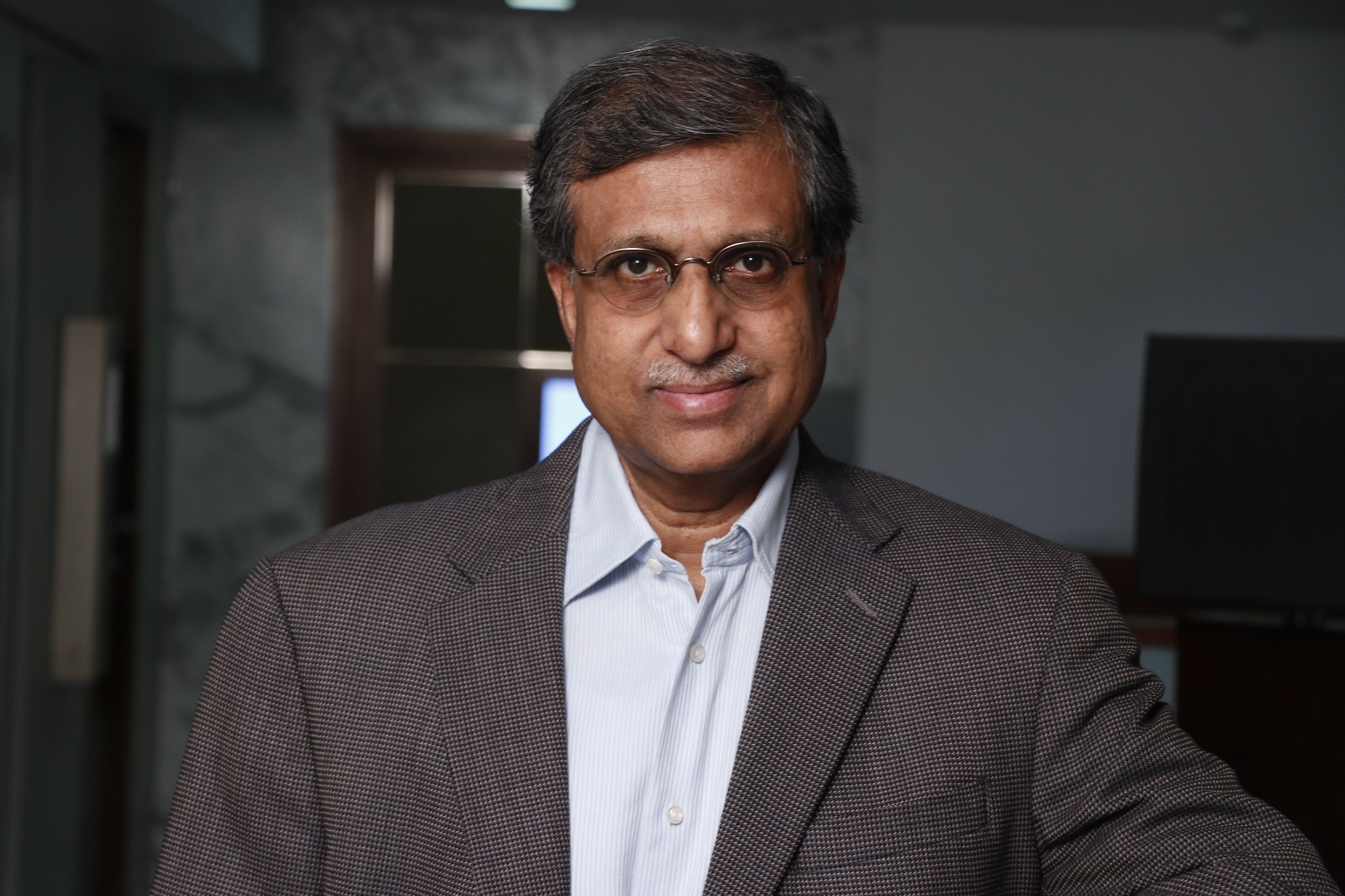
A brief profile
Known as KP, Krishna Prasad Atluri is an engineer-MBA and seasoned entrepreneur with more than four decades of experience across finance, technology, media, sales and operations. His professional profile records 12 years of work in the United States and 24 years in India, with continuing work across both countries. He has held leadership roles in multinational corporations spanning diverse industries, geographies and markets.
Described in his current profile as the founder of four ventures and an active leader in two, he has built companies, negotiated international alliances and devoted a continuing part of his career to questions of access, consent, equality, corporate governance and accountable institutions.
He hosts The Socio-Economic Balance Podcast, a limited series of conversations with leading Indian economic and financial voices about questions that matter far beyond India.
01
Entrepreneurial ventures
OneMoney and FinTech Products & Solutions
Founder of FinTech Products and Solutions India Private Limited. Its subsidiary FinSec AA Solutions became India’s first—and largest—RBI-licensed Account Aggregator under the OneMoney brand, helping enable consent-based financial data sharing.
Equal Identity
Co-founder and Vice-Chairman of Equal Identity, an advanced data-sharing platform. Its One Equal initiative delivers AI solutions, supports financial inclusion and seeks to democratize opportunities that empower citizens.
Phone2Vote India
Founder of a constituency-management and citizen-grievance platform designed to strengthen communication between elected representatives and citizens. The platform was endorsed by Yale University’s Global Justice Program and became a partner of the World Bank’s Global Partnership for Social Accountability.
02
Finance and international business
KP’s career spans financial services with the ITC Group and investment activity through iLabs, a venture-capital and incubation group, as well as M&A, business development and corporate strategy. He served as financial adviser for the financial closure of a 520 MW thermal power project.
In the United States, he helped build strategy and alliances for a Chicago technology startup with SAP, Oracle and IBM, and served as CFO of a New York telecom-product company with a worldwide customer base.
03
Technology, media and management
His operating experience includes technology and IT services, venture incubation, sales, partnerships and mentoring. In media, he served as the management head of a daily newspaper and as the first Managing Director of TV9, the 24-hour news channel.
He has also advised and mentored DigitSecure India, whose work included last-mile technology solutions.
04
Education and formative leadership
KP studied engineering at Osmania University and completed his MBA at XLRI Jamshedpur, earning Gold Medals in Economics and Finance. He graduated in Engineering with Distinction.
In 1980, as elected General Secretary of the Students’ Union at Osmania University’s College of Engineering, he wrote publicly about unequal access to education, poverty, democratic representation and the responsibility of students to society—questions that would continue to surface throughout his professional and entrepreneurial work.
05
The questions he raised in 1980
His end-of-term address as General Secretary began with a distinction between making difficult, informed decisions and allowing events to overtake us. Reflecting on the government’s permission for donation-based engineering colleges in Hyderabad and Vakadu, he argued that unequal educational access was part of a wider social process through which wealth could consolidate itself.
He questioned whether electoral systems always reflected the public will, who should confront entrenched injustice, and why ignorance among affected communities and indifference among others made reform difficult. He asked engineering students to consider what they owed a society that had invested in their education, while acknowledging the tension between becoming capable engineers and engaging in the long struggle against social problems—above all poverty.
The speech also challenged educators to combine knowledge with a human touch, imagination and maturity. He criticized distance created by institutional power, argued that colleges existed for learning rather than merely as employment arrangements, recorded the Students’ Union’s practical limitations, and closed by thanking students, fellow office-bearers, the principal, physical director and administrative staff.
06
Consent, inclusion and balance
In his 1 July 2020 essay, “Account Aggregation, in India, or Open Banking, Worldwide, Empower Small Customers,” KP described Account Aggregation and Open Banking as ways for customers to direct the fulfilment of their own financial needs with both freedom and responsibility. Under India’s Account Aggregator framework, he emphasized, personal and financial information is shared only with customer consent.
He defined consent as an informed agreement to a specific exchange and argued that digital consent could transform an instinctive reaction into an intentional action; replace extracted, default or checkbox consent with voluntary choice; and turn broad authorization into a precise consent artefact with a stated purpose, scope and timeline.
In his view, this could reduce the asymmetry of power and knowledge between a corporation and an individual. Fair exchanges, together with the “sachetisation” of products and services, could help democratize finance and advance financial inclusion.
But opportunity carried responsibility. Product quality, vigilance and sustainable pricing were essential to trust in the Account Aggregator ecosystem. He warned against predatory lending, unjust or unsustainable educational-loan costs, and treating an average consumer’s “yes” as though it were an expert decision. He praised the Reserve Bank of India’s NBFC-AA regulation as pathbreaking and called for a fair, inclusive and democratic ecosystem built on trustworthy, sustainable relationships.
“AA democratizes the financial sector by establishing a balance in exchanges between two unequal parties.”
Current appearance
Global Fintech Fest 2026
AI Architecture for Regulated Industries
September 9 · 11:00–11:40 AM · Hall 202